
Read Barton County Deed Records by Instrument Type
Deeds are only part of the picture. The Barton County instrument list from the Register of Deeds covers far more than conveyances. Plats, surveys, easements, releases, statutory liens, and mortgages all appear in the deed records. Oil and gas papers appear there too. So do water rights, pipeline instruments, lis pendens, death certificates, powers of attorney, and annexation agreements. Decide first which recorded act could answer your question. Then search that category of the property records.
| Deed Type | What It Does | Common Use |
|---|---|---|
| Warranty deed | Conveys the stated interest with deed warranties | Ordinary sale or transfer |
| Quitclaim deed | Conveys whatever interest the grantor holds | Family transfer or title cleanup |
| Trustee or personal representative deed | Conveys through a trust or estate role | Trust and probate administration |
| Sheriff's deed | Records a transfer following judicial process | Completed court-ordered sale |
| Patent deed | Documents an early federal land transfer | Historic chain research |
A deed proves a transfer of ownership. Other instruments do different work. A mortgage, lien, easement, lease, or covenant can burden or shape an interest without moving title at all. Search these parts of the deed records separately. Then watch for later releases, assignments, modifications, or corrections that change what an earlier document means for the parcel.
Barton County eSearch Starts in the 1950s
Remote searching runs through eSearch/RAP. It offers later index work and paid images. Barton County states that its online index reaches back to the 1950s. Records held in the office go much deeper, to the 1870s. Logging in requires an account, a password, a verification step, and agreement to K.S.A. 45-230. County terms also say the online index is not the official record. A blocked login or a missing image never ends the search. Open the official recorder eSearch source and compare what the login screen asks for.
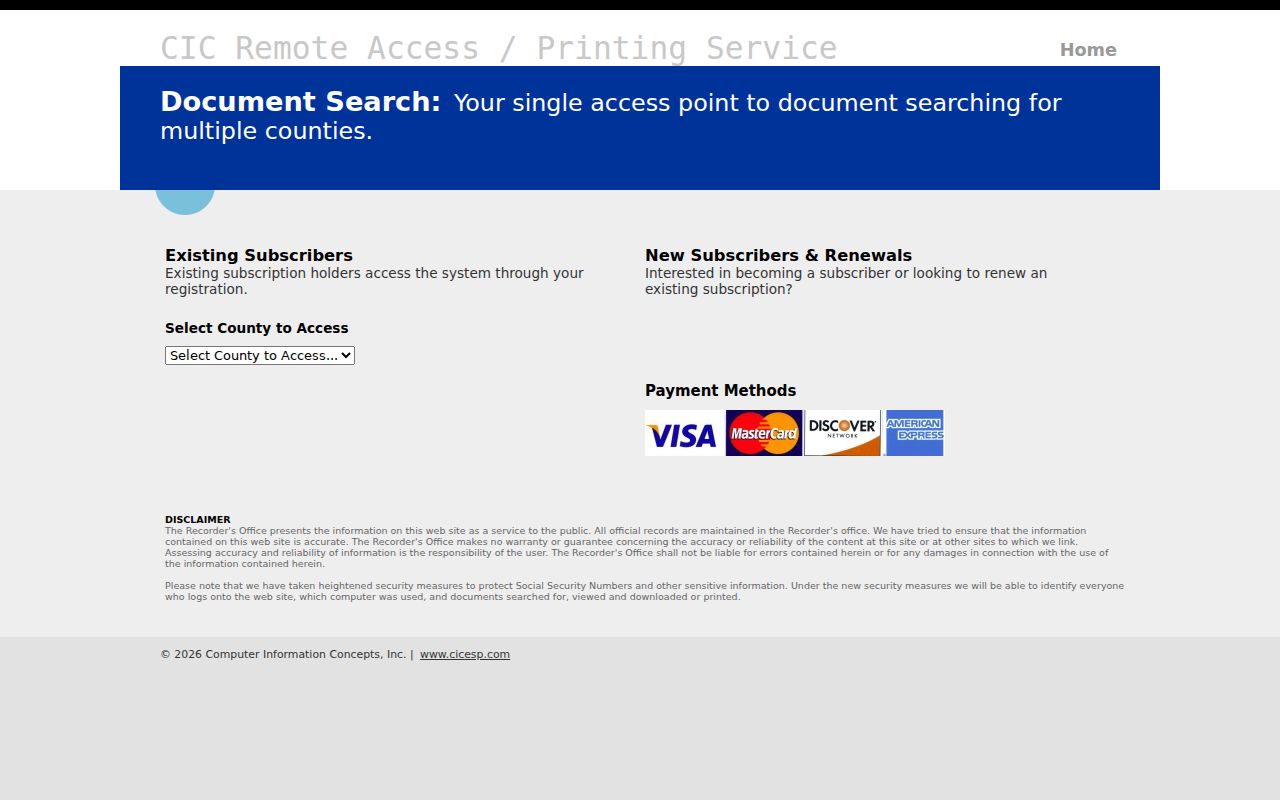
The account gate simply reflects paid remote service. For the official record and the older deed books, the Great Bend courthouse remains the route.
Book Prefixes Can Rescue a Missing Barton Deed
Barton County documents a local indexing quirk that trips up searches. Deed books through number 250 use a D prefix. General record books through 578 use G. Books numbered after 578 carry no letter at all. A correct book and page can look missing when the prefix is entered for the wrong era. Try the documented convention first. Keep each reference exactly as printed on the instrument. If the deed still will not surface, call the Recorder for help rather than guessing. Never silently alter a historical citation just to make a portal return a result.
Note: The D, G, and no-prefix pattern is a local access clue, not a different class of ownership interest.
Walk Barton's Grantor-Grantee Index in Both Directions
The Register indexes by party name and legal description. Chain building works in both directions. Start with the latest deed matching the parcel. From there, follow names and prior references backward to find how the owner of record acquired the land. Then search forward again. That second pass catches corrections, later conveyances, releases, death affidavits, and foreclosure instruments hiding in the deed records.
- Identify the current parcel and copy its legal description.
- Find the current owner's acquisition deed with that owner as grantee.
- Read the grantor and any prior book/page reference, then search that grantor as an earlier grantee.
- Repeat while the legal description remains consistent, then search forward for later changes.
- Move to courthouse books or microfilm when the chain passes the online cutoff.
- Grantor
- The party transferring the stated interest.
- Grantee
- The party receiving the stated interest.
- Chain of title
- The linked sequence of instruments affecting the same land.
- Book/page or instrument number
- The Recorder's retrieval reference for a filed document.
Remote Access Has Plans, Pages, and Limits
The county posts three remote eSearch plans: $25 for 24 hours, $250 for 30 days, and $800 for a year. Copies are posted at $1 per page. The yearly plan carries no additional copy fee language. Confirm the current offer before paying. The recorder FAQ explains PDF printing, pop-ups, cookies, county-specific usernames, and how unused pages sit in a page bank. These charges cover remote research only. They are not the fee for recording a new instrument or ordering a certified office copy. Search first, note the reference, and ask which copy form fits your intended use of the property records.
Barton's Deed Books Reach Into the 1870s
The online cutoff says nothing about when Barton County deed records actually begin. The office reports manuscript records and United States patent deeds reaching into the 1870s. The Kansas Historical Society lists a 1902 Barton Plat Book. It also lists an atlas from roughly 1916 showing township owners. Those snapshots can supply names and place clues for an older chain. For the conveyances themselves, rely on courthouse deed books and microfilm. Historic plats, atlases, Sanborn maps, and newspapers add context. A mapped owner or legal notice still does not prove a transfer was completed. The Barton County History Collection spans roughly 1871 through 1970. It includes town-company, colony, Fort Zarah, Ellinwood, and Hoisington material. Great Bend Public Library keeps a microfilm reader and Great Bend Tribune archives back to 1908. The Library of Congress holds the Barton County Democrat from 1885 through 1915. A legal notice can yield a surname, a date, a legal description, an estate, or a sheriff-sale clue. Use that clue to find the court file and the recorded instrument behind it. For a long chain, build a dated table. Track the grantor, grantee, deed type, legal description, book and page, instrument number, and any prior reference printed on the deed. Never skip a quitclaim, correction deed, trustee deed, or personal-representative deed. These are not ordinary sales, but they count just the same. The same goes for survivorship affidavits, transfer-on-death papers, and sheriff's deeds. After each backward step, search forward again. A later correction or re-recording can change how the earlier entry should be read. Rural descriptions demand exact transcription. Copy the section, township, range, quarter, and smaller aliquot parts precisely. For city land, keep the named addition, block, and lot intact. A railroad corridor or road right-of-way can mislead. A split tract or later plat can do the same. Each one can make a historic description look close while pointing to different ground. Preserve punctuation and abbreviations until the recorded plat and the modern parcel match on the tax roll and GIS map.
The Free Barton Alert Watches Names, Not Title
Barton County's free Property Activity Alert watches names rather than title. Register a name. The system sends notice whenever a deed or mortgage is recorded under it. Registration is free and unlimited. A common surname can trigger false alerts. A filing can also slip past the system entirely. So treat any alert as a prompt, not a verdict. Inspect the instrument itself: the parties, the legal description, the notarization, and any prior reference. The service decides nothing about validity. Suspected fraud goes to the Barton County Sheriff.
Obtain a Barton County Deed Online or at the Courthouse
A remotely printed image works fine when a plain copy is all you need. For anything certified, contact the Register of Deeds at 1400 Main Street, Suite 205, Great Bend, Kansas 67530, or by phone at 620-793-1849. The office is open Monday through Friday, 8:00 a.m. to 5:00 p.m. A mail request should name the parties, the legal description, the date range, and any book/page or instrument number you have.
Starting March 1, 2024, the office asks for a self-addressed stamped envelope so recorded documents can come back to you. The county says ordinary recorded papers usually return in three to seven business days. That timing covers recording only, not appraisal-roll updates.
Be specific when you order a copy. List the parties, document type, recording date range, complete legal description, and any book/page or instrument number on hand. Ask whether a plain, certified, or remotely printed copy suits your purpose, and get the current cost from the office. Recording a new deed carries its own fee: deeds and listed conveyances run $21 for the first page and $17 for each added page, while releases and assignments follow a separate schedule under county guidance and K.S.A. 28-115.
The office's recording checklist spells out reasons an instrument might come back. It wants the original document, the fee, a full legal description, correct spelling, an acknowledgment, a Sales Validation Questionnaire or its exception where applicable, at least 10-point type, a two-inch top margin, signatures with titles, a prior reference when relevant, and complete exhibits. One caution: acceptance by the office never means the Recorder drafted the deed, blessed its legal effect, or guaranteed title.
Recorded, not guaranteed. Barton County deed records show what the office accepted and indexed. They do not supply a title opinion, resolve lien priority, or rule out an unrecorded interest.
Recording Fees Differ From Copy Costs
The county's fee calculation page breaks recording charges down by category. Deeds, conveyances, oil-and-gas instruments, and notices cost $21 for the first page plus $17 for each added page. Front and back count as two pages. The county's 12-page example comes to $208. Mortgage releases and assignments post at $20 for the first page and $4 for each additional one, with another mortgage added to the same release at $16.
These figures are recording fees, not copy costs. Remote image pages and certified copies are billed separately. Confirm the current fee and document category with the office before filing anything.
A Complete Barton Filing Prevents Avoidable Returns
Barton County's checklist aims to prevent avoidable returns. It asks for the original instrument, the correct fee, a full legal description, correctly spelled names, an acknowledgment, signatures with titles, a prior book/page where relevant, and exhibits. Conveyances also need a Sales Validation Questionnaire or an applicable exception. Formatting matters too: at least 10-point type and a two-inch top margin.
Recorder staff scan for apparent errors. They assign the recording time and book/page, and they index each document by name and legal description. Recording still is not approval. The office did not draft the paper and takes no position on its legal effect. The Register prepares no deeds and offers no legal opinions.
Careful deed searching pays off the same way. Save the retrieval date and the exact name variant used. Entity punctuation, initials, trust styles, and common surnames can all shift the results. A signer acting under power of attorney can too. Before calling two names part of the same chain, match the legal description. Then confirm the prior recording reference.